
Routes
A route worth the trip
A memorable running route pairs a clear purpose with small details that make returning feel natural.
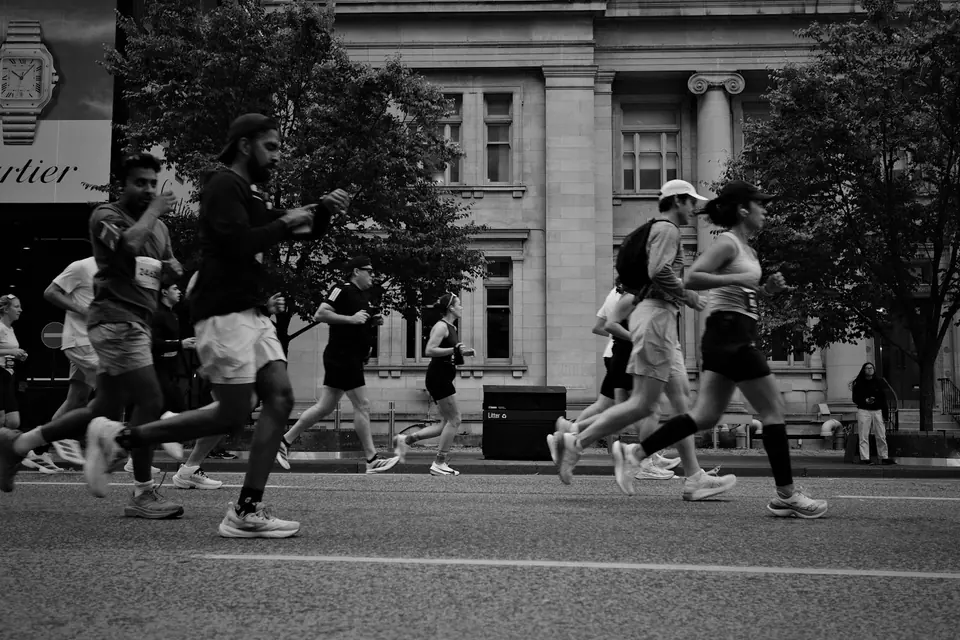
A route earns a place in my week when it removes small decisions without becoming dull. I know where I will cross, where traffic needs attention, and where the surface asks me to shorten my stride. That familiarity makes room to notice weather, light, and the pace of the day. A Boston route can hold that balance. BC Law: Impact's Boston’s Best Running Routes points toward a city where water, paths, bridges, and neighborhoods can turn an ordinary outing into a sequence of clear landmarks. I don't need a grand destination every morning. I need a route that begins easily, gives me one or two moments worth looking up for, and gets me home before logistics become the main event.
Travel shows the same principle at a larger scale. Outside's 10 Best Running Vacations of 2026 gathers trips built around the chance to run somewhere new, but novelty alone doesn't make a route stay with me. The trips I remember have an understandable shape: a start I can reach on foot, a stretch that changes the view, and a finish that doesn't require solving a transport problem while tired. On an unfamiliar street, that shape is a kindness. Back home, it is still useful. A good route gives me enough direction to settle in, then enough variation to keep the miles from flattening into a chore. The place matters, but the route's sequence matters more.
Boston and Provo suggest different scales of running city, yet both are invitations to pay attention to the route close at hand. Provo.com's Running Routes in Provo: A Runner’s Guide puts the question plainly: which roads, paths, or turns will I want to know well? I begin near home with a loop short enough to repeat on a busy morning. Then I give it an anchor, perhaps a park entrance, a bridge, a coffee shop that is closed before I pass, or a block with generous shade. One anchor is enough. The next time, I change only one section. That small adjustment lets the route grow without making every run a navigation project.
After a few outings, I decide whether a route deserves to become a fixture. I look for practical things first: crossings I can handle, a surface that suits the day, and a way to shorten the loop when time disappears. I also look for one detail that changes slowly, such as trees along a path, a market setting up, or light on the same corner. Repetition doesn't mean identical effort. Some days I run the loop gently; some days I include a quicker section; some days I simply walk part of it and learn the turns again. A route worth repeating holds all those versions without asking for a special occasion. Its value is not that it looks impressive on a map. It is that I can leave the door and trust where I am going.